
Also, GPS apps like Strava aren’t incredibly private and can reveal a lot about your location and other information. This may be something to consider before jumping into an app like this. You can read all of our thoughts on this app in our Strava fitness app review. Nike Training Club is a free fitness app with a robust workout library that includes one-off workouts as well as periodized programs led by certified instructors.
This sense of belonging to something bigger makes a huge difference in long-term adherence. The community features add motivational value, with leaderboards, challenges, and the ability to share workouts. Health professionals particularly appreciate Cronometer, with Cronometer Pro offering specialized features for dietitians and nutritionists to work with clients directly through the app. Cronometer stands out from crowded alternatives by prioritizing data quality above all else, using verified sources like the USDA and Nutrition Coordinating Center rather than unreliable crowd-sourced entries. Several apps on the Apple store or Google Play claim they’re free with in-app purchases; however, when you download the app, you realize the in-app purchase is to unlock use of the app at all.
What are typical retention rates for free vs. paid subscriptions?
If high-intensity workouts aren’t your thing, bust out zen moves like tree pose and downward dog using YogaRenew, an app for following virtual yoga classes. Multiple styles are offered, from vinyasa to restorative practices, with over 1000 live classes available to stream. And, if you’re a beginner, no worries— a variety of levels, intensities, and class lengths are offered. Aside from yoga, guided meditation and breathwork classes are also available in the app to get you super chill before or after executing child’s pose. Yes, with newer workout apps, such as Future, you can get connected to a personal trainer through an app. It will cost more compared with other apps but will be cheaper than a standard personal training session at the gym.
Nailing these (as Samsung does) is extra-critical in 2026, partly because the Galaxy Watch 8 has some new competition for Android users (namely, from Google’s Pixel Watch). Garmin prioritizes a wind-down muscle-focused training plans time, switching from a jam-packed interface to just a clock during the time you are typically sleeping (which you note during set-up). It’s worth mentioning that in order to be this rugged and durable, the Garmin Instinct 3 is also quite heavy at 53 grams.
- You can connect it to your physical bike, elliptical, or exercise machine by adding a cadence sensor — making your setup feel incredibly real.
- If you’re a runner, the Charge 6’s built-in GPS allows you to see pace and distance, so no need to check your phone.
- That’s a lot of information for each exercise, leading us to rate the instruction a 5 out of 5.
- You can change some of these privacy settings, but you can’t turn it off completely, so you’ll want to be mindful of that.
- It has comfortable nonslip handles — one with an LCD screen to see your jumping data.
- For example, apps that are connected to wearables like an Apple Watch or Fitbit may be able to track heart rate, oxygen levels, and time spent in various sleep cycles.
Best Health App for Sleep: Sleep Cycle
You can even swap between your Pixel Watch during the day for Fitbit Air for sleep without missing a beat. We’ve been wearing and documenting fitness trackers as far back as 2015, when we reviewed the very first Apple Watch. We started cross comparing fitness trackers as early as 2017, when we broke down the best fitness trackers for activities like strength training, running, hiking, golf, and more. Now in 2026, we’re more dialed into the state of fitness trackers than ever before as nearly all our editors are wearing some sort of device on a daily basis. If you know someone stuck in a workout rut, these exercise cards will snap them right out of it. Each of the 50-plus cards is printed with images and descriptions for bodyweight exercises that can be mixed and matched to create mini-workouts — no YouTube videos, workout apps, or fancy programming necessary.
What’s the best free workout app?
Hannah Bradfield is a Senior Health and Fitness Writer for Women’s Health UK. An NCTJ-accredited journalist, Hannah graduated from Loughborough University with a BA in English and Sport Science and an MA in Media and Cultural Analysis. She has been covering sports, health and fitness for the last five years and has created content for outlets including BBC Sport, BBC Sounds, Runner’s World and Stylist. She especially enjoys interviewing those working within the community to improve access to sport, exercise and wellness. Hannah is a 2024 John Schofield Trust Fellow and was also named a 2022 Rising Star in Journalism by The Printing Charity. A keen runner, Hannah was firmly a sprinter growing up (also dabbling in long jump) but has since transitioned to longer-distance running.
Some cool-down ideas include light walking after aerobic exercise or static stretching after resistance training. According to the American Heart Association, stretching after exercise can also help reduce muscle soreness and tightness by reducing the buildup of lactic acid in your muscles and joints. For instance, carbohydrates can help fuel your muscles before exercise, especially high intensity exercise that lasts longer than 1 hour. Eating carbs after exercise can also replenish glycogen stores and assist with the absorption of amino acids into your muscles during recovery.
Best Exercises for Weight Loss, Ranked by Calorie Burn (+ Beginner Workout Plan)
Automatic synchronization eliminates manual data entry while providing real-time workout adjustments based on current fitness status. Apps with robust wearable integration demonstrate 40% higher user engagement through gamification and precise progress tracking. AI-driven customization represents the premium tier, with algorithms analyzing multiple data streams to optimize workout timing, intensity, and recovery periods. This technology bridges the gap between generic programming and expensive personal training.
Program alignment with specific fitness objectives ensures consistent motivation and measurable progress. Apps optimized for strength building offer different features than cardio-focused platforms, while flexibility-centered programs require distinct content libraries and instruction styles. Flexibility manifests in multiple dimensions beyond scheduling convenience.
Follow Select
Another staffer said it’s the first platform that’s helped her exercise consistently in years, thanks to a knowledgeable, encouraging trainer. Workout apps can be very effective when you use them consistently and choose plans that match your fitness level and goals. They provide structure, reminders, and progression, but results still depend on your effort, recovery, and nutrition outside the app. Accountability needs vary a lot depending on lifestyle and personality. If you struggle to stay consistent, you may want coaching, check‑ins, leaderboards, or reminders that nudge you to show up.
One of the newer safety features on the Strava app is called the Beacon, which lets you share your location in real time with an emergency contact. The app’s creators believe that connection is the best way to stick to your goals. That’s why they set you up with a partner who can hold you accountable. There are plenty of coaches on this app with numerous years of experience in their respective fields.
Best Alternative Weightloss Add-Ons: Found

Our team of Men’s Health fitness editors, including certified trainers and former athletes, have tried every new app that’s entered the market over the past several years. That’s on top of our expansive experience with digital fitness since it became a “thing.” We also consulted our large network of experts, including our Men’s Health Advisory Board, to share their insights. You can follow your own route or explore Strava’s massive network of roads and trails, built by millions of athletes worldwide.
Best fitness tracker for performance
Lloyd Coombes is a freelance contributor from Essex, UK, with a passion for fitness and tech. He can be seen at TechRadar, iMore, Live Science and more on a regular basis, and enjoys weightlifting and middle-distance running. We’ve reviewed these apps and plenty that didn’t make the cut to bring you our recommendations, bringing years of tech and software experience to the table. Get full access to premium articles, exclusive features and a growing list of member rewards. “Clean, affordable and accessible facilities. Lots of equipment to chose from and friendly staff to help you get oriented. Perfect for travelers wanting to keep up their routine while on vacation.” “Great place to workout. They have an ample amount of equipment to handle large capacity workouts.”
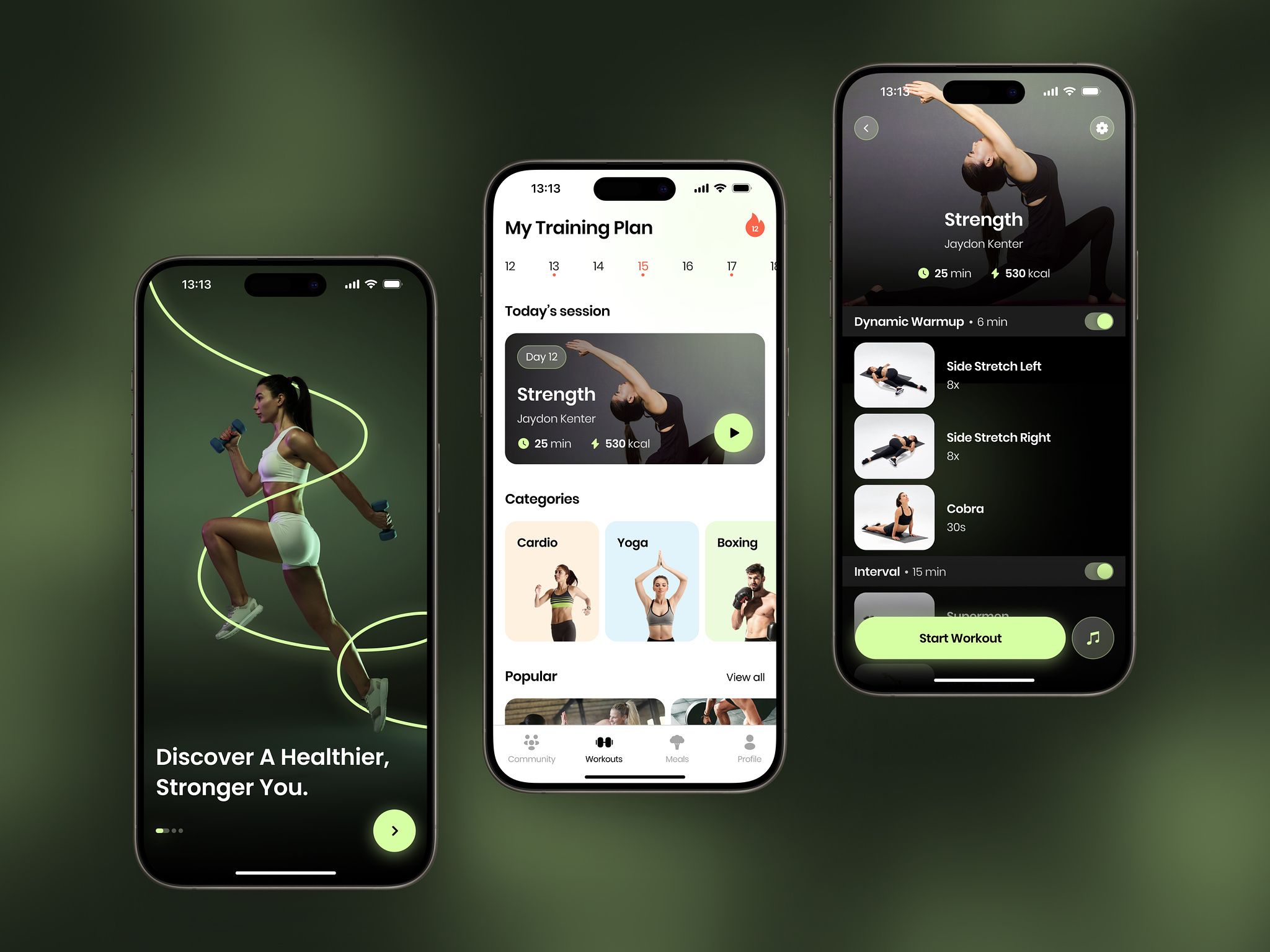
Is there an app that tells me what to do at the gym?
We chose TR(AI)NER by Element 26 as the best workout app for weightlifting because of its comprehensiveness. Some health apps can also give you access to information you wouldn’t necessarily have otherwise. For example, apps that are connected to wearables like an Apple Watch or Fitbit may be able to track heart rate, oxygen levels, and time spent in various sleep cycles. For example, for the Caliber app we went through several weeks of working out with a personal trainer.
Best Free Workout App for Cyclists: Strava
“That bothers me because it usually means I have to shortcut prescribed workout regimens, and I don’t like to take ‘the easy way out’; I’d much rather have a modified routine,” Currin said. Currin said it’s known in the medical community that certain ethnic populations have heavier bone density and nuanced body composition. Despite body mass index (BMI) being widely dispelled and not accurate for certain groups of people, BetterMe still uses it and identified her as “morbidly obese.” It allows you to record your activity and share your location with three designated safety contacts.