

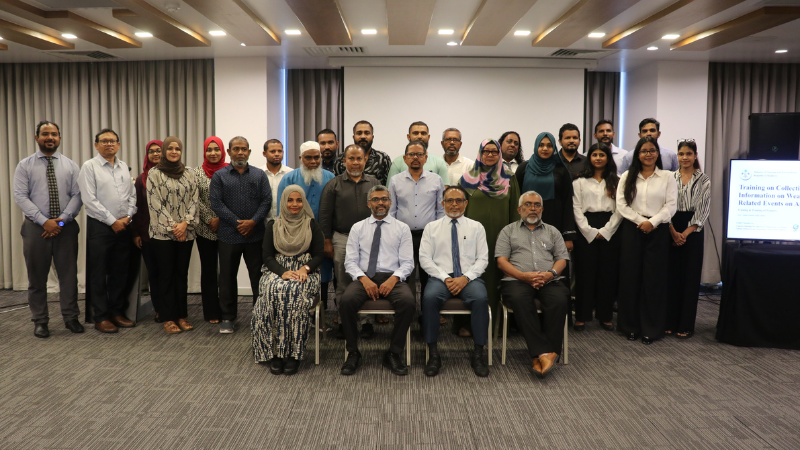
The Climate Change Department of the Ministry of Tourism and Environment successfully conducted a two-day Training and Training of Trainers (ToT) on the Collection of Information on Weather-Related Events in Agriculture, held on 21st and 22nd October 2025 at Meeruma, Malé.
The training was organized under the Capacity Strengthening for Improved Transparency of Climate Change Mitigation and Adaptation Actions in the Maldives (CBIT Maldives) Project, funded by the Global Environment Facility (GEF) and implemented by the Ministry with support from the United Nations Environment Programme (UNEP).
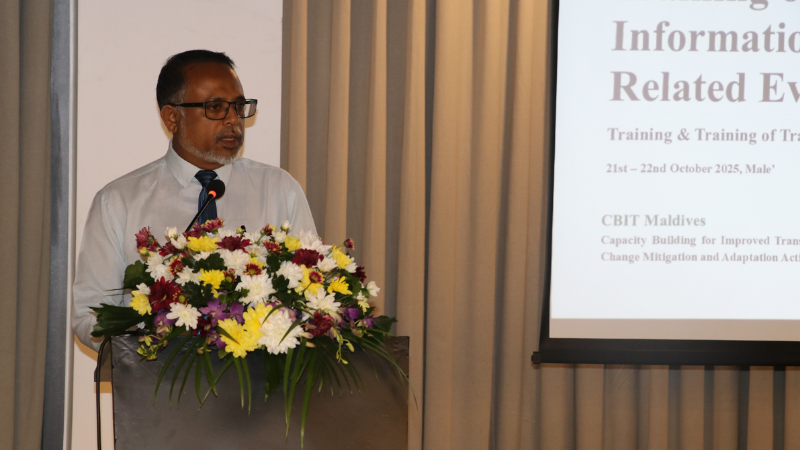
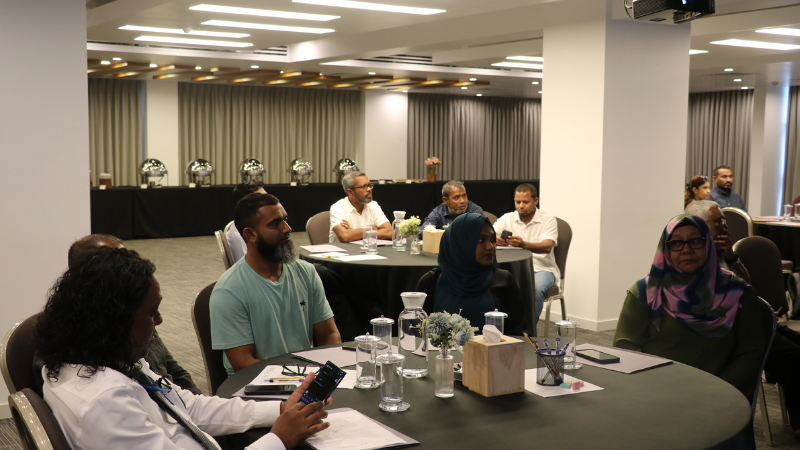
The training aimed to enhance the capacity of local councils to collect and report data related to extreme weather events and their impacts on agriculture. The participants were from five pilot islands – Sh. Feevah, AA. Thoddoo, Th. Kandoodhoo, GDh. Fiyoari, and Gn. Fuvahmulah – which were selected under the CBIT Maldives Project as part of the piloting of improved tools and methodologies for tracking adaptation. These islands were chosen based on their vulnerability to climate impacts and the importance of agriculture to community livelihoods.
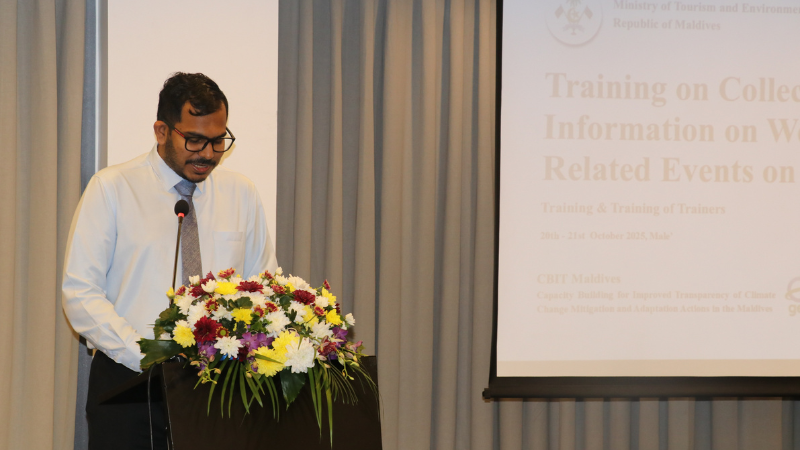
The training was inaugurated by the Minister of State for Tourism and Environment, His Excellency Mohamed Faiz, who highlighted the critical role of accurate data in strengthening national climate transparency and informing adaptation strategies. The first day focused on updated methodologies and findings from climate impact assessments relevant to the agriculture sector. The training was carried out by consultants from LAMER Group Pvt Ltd, with sessions led by Mr. Hussain Zahir, Ms. Aminath Aroosha, and Mr. Adam Adheel.
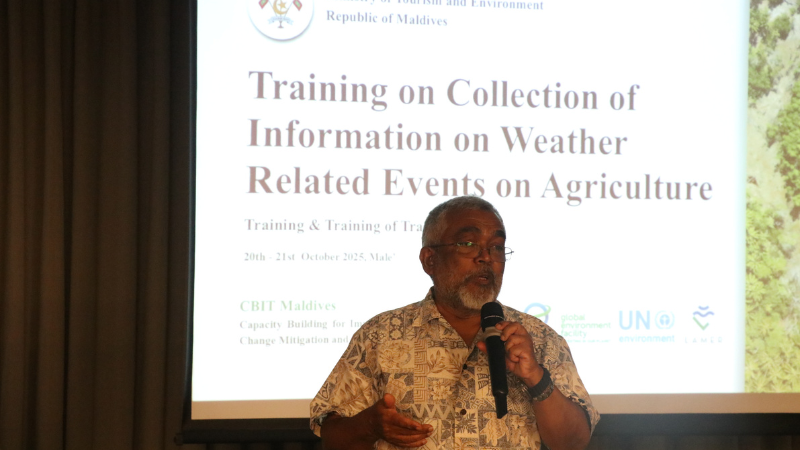
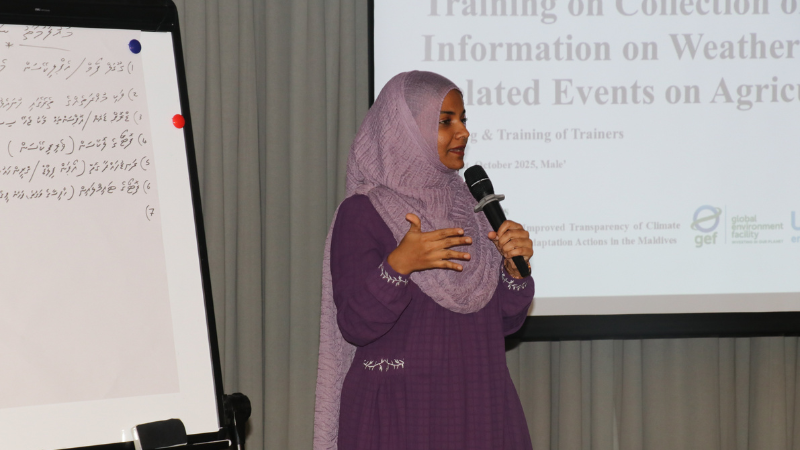
As part of the technical sessions, the consultants presented a newly developed data collection form for recording extreme weather events and their impacts on agriculture. The form was designed based on the findings of a feasibility assessment conducted under the CBIT Maldives project. Participants engaged in open discussions to review the form’s relevance and usability. Several practical improvements were identified to enhance its applicability.
On the second day, a Training of Trainers (ToT) session was conducted to equip participants with the knowledge and skills needed to replicate the training in their respective islands. The session included hands-on guidance on using climate data tools, conducting soil and water sampling, accessing MET services, and applying effective facilitation and stakeholder engagement techniques.
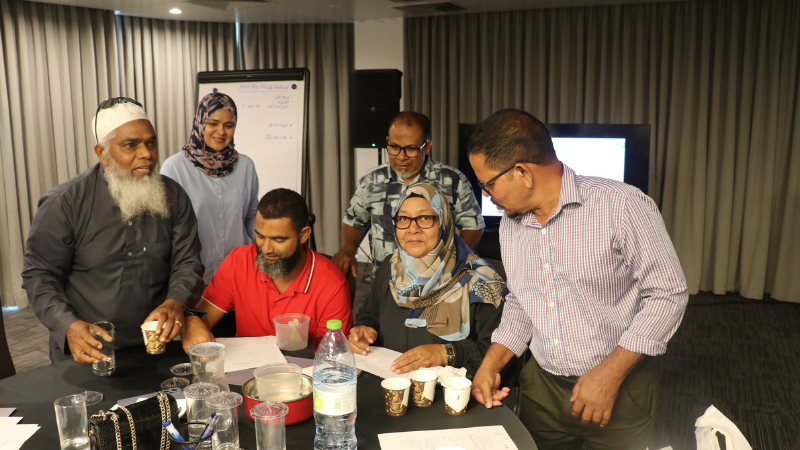
A total of 16 participants took part in the two-day training, representing local farmers and council staff from the five pilot islands, along with officials from key institutions including Allied Insurance, the Maldives National University (MNU), the Maldives Meteorological Service, and the Ministry of Agriculture and Animal Welfare. The inclusion of both technical experts and community stakeholders ensured a comprehensive understanding of the practical challenges in climate data collection and its relevance to agriculture.
The training concluded with a closing ceremony, where Minister of State for Tourism and Environment, His Excellency Ibrahim Mimrah, awarded certificates to the participants and commended their commitment to supporting data-driven climate resilience in agriculture.