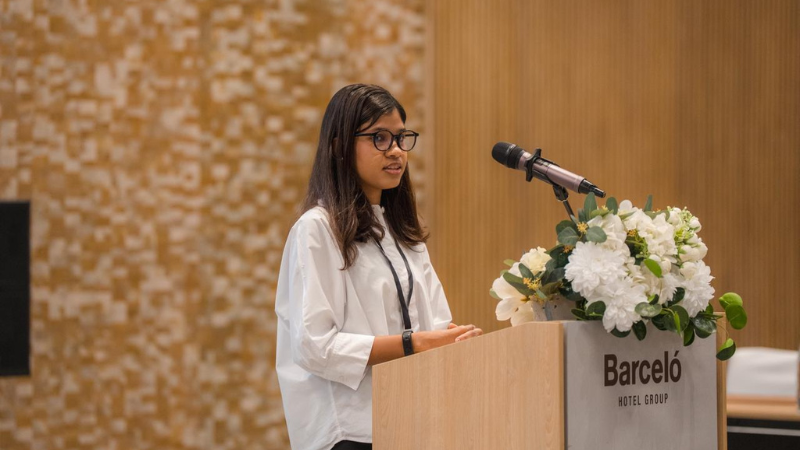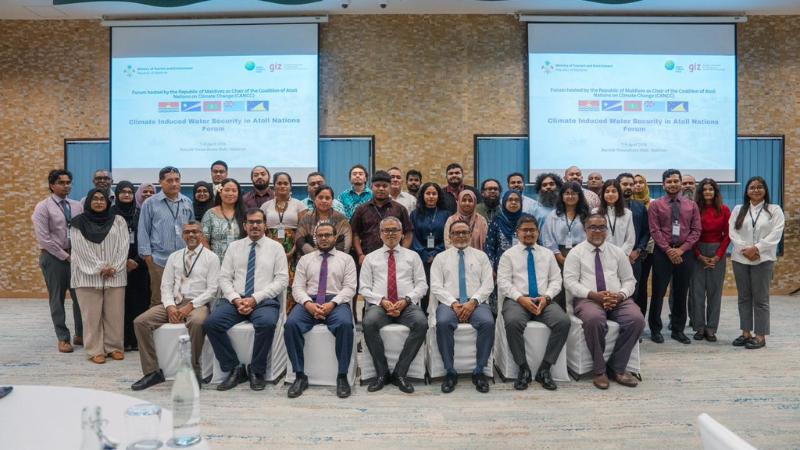
The Government of Maldives, through the Climate Change Department of the Ministry of Tourism and Environment, has officially inaugurated the “Climate-Induced Water Security in Atoll Nations Forum,” held from 7th to 9th April 2026 at Barceló Nasandhura Malé. The forum is convened by the Ministry of Tourism and Environment in its capacity as Chair of the Coalition of Atoll Nations on Climate Change (CANCC).
The three-day forum brings together representatives from atoll nations, development partners, and key stakeholders to address the growing challenges of water security driven by climate change and to identify resilient and sustainable solutions for vulnerable island communities. The forum is organized with support from the Green Climate Fund (GCF) Readiness Project, “Strengthening the Water Sector for Enhanced Planning, Programming and Implementation of Climate Finance in the Republic of Maldives,” in collaboration with the Deutsche Gesellschaft für Internationale Zusammenarbeit (GIZ).
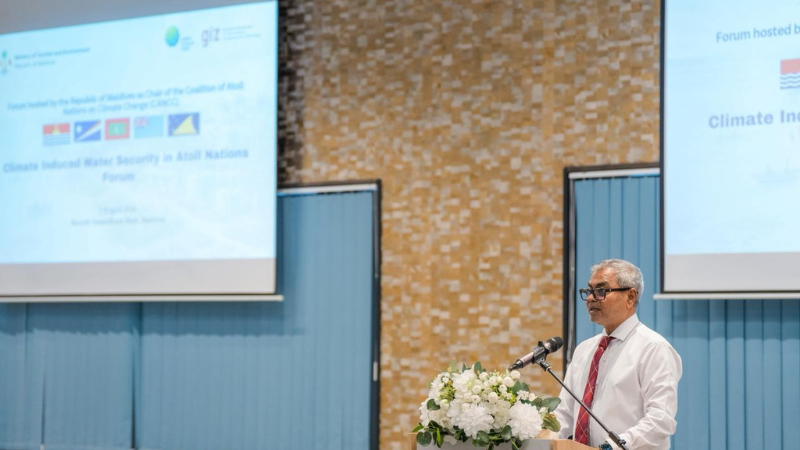
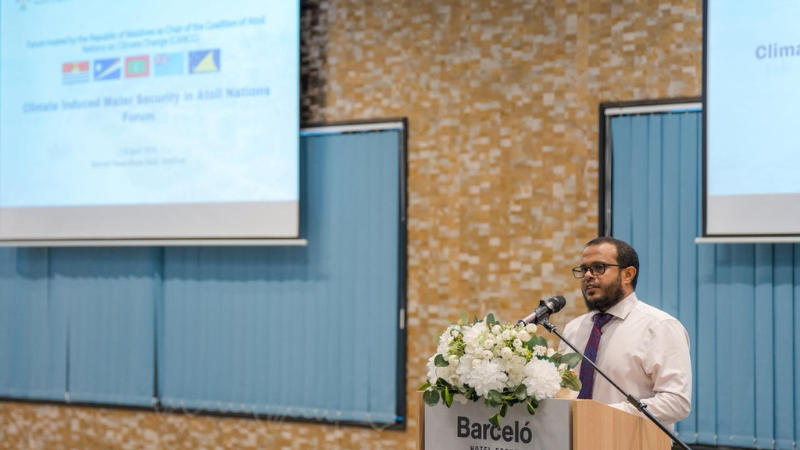
Participants include representatives from Kiribati, Tuvalu, the Republic of the Marshall Islands, and Tokelau, alongside local utilities, regulatory bodies, academia, and technical experts. The forum provides a vital platform for dialogue on one of the most pressing challenges facing low-lying island states, namely water security in the face of climate change.
The forum was officially opened by the Minister of Tourism and Environment, H.E. Thoriq Ibrahim, who highlighted the growing vulnerability of Small Island Developing States to climate-induced water stress. In his remarks, the Minister underscored the profound environmental changes already being experienced across the Maldives and similar island contexts. He noted that rainfall patterns are becoming increasingly unpredictable, dry periods are intensifying, and saltwater intrusion is contaminating fragile freshwater lenses. These changes, he emphasized, are not distant threats but present-day realities already affecting communities across the country.
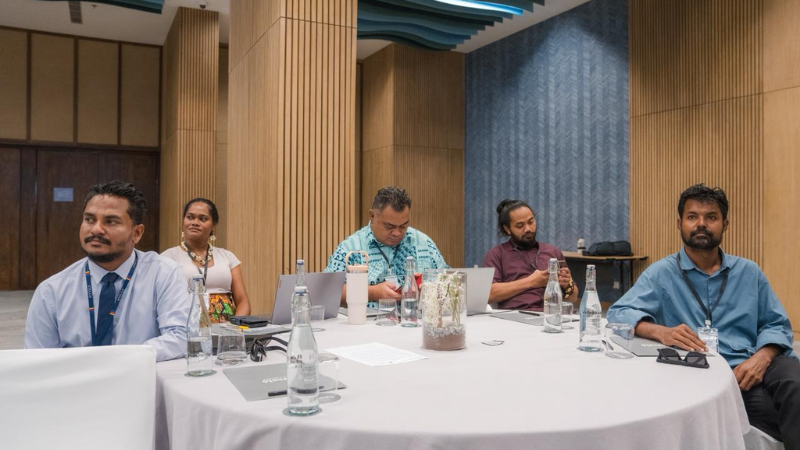
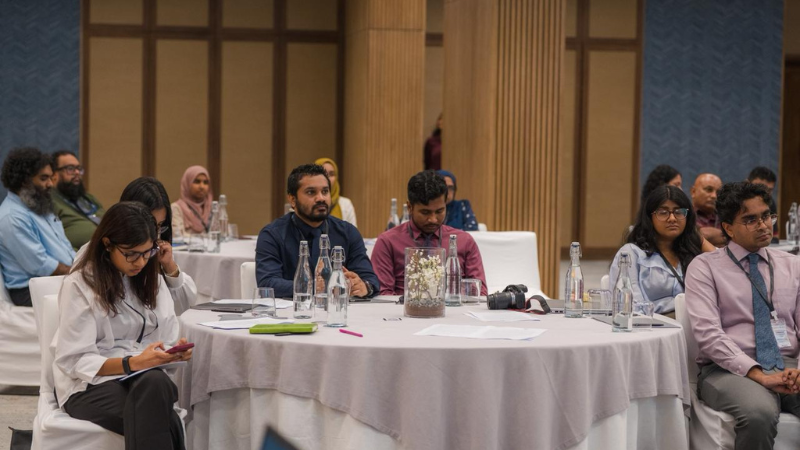
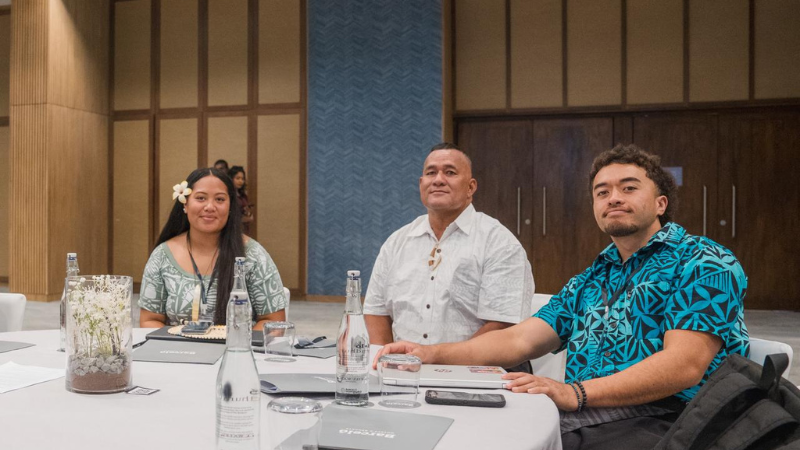
He further stated that the Government of Maldives has placed water security at the center of its climate agenda. Through its Nationally Determined Contributions (NDC 3.0), the country has committed to strengthening climate resilience while advancing low-carbon development. Achieving water security, as emphasized during the forum, requires integrated approaches that combine infrastructure investment, technological innovation, and community-based adaptation strategies. The Maldives continues to invest significantly in these areas, prioritizing climate-resilient infrastructure, improved water management systems, and sustainable resource use.
The forum included a series of technical exchange sessions, providing a platform for participants to share knowledge and practical experiences across atoll nations. These sessions focused on key thematic areas such as desalination and water production systems, groundwater management and protection, rainwater harvesting, utility operations and maintenance, and emergency water preparedness. Experts from government agencies, utilities, and development partners contributed valuable insights into both the challenges and solutions relevant to small island and atoll environments.