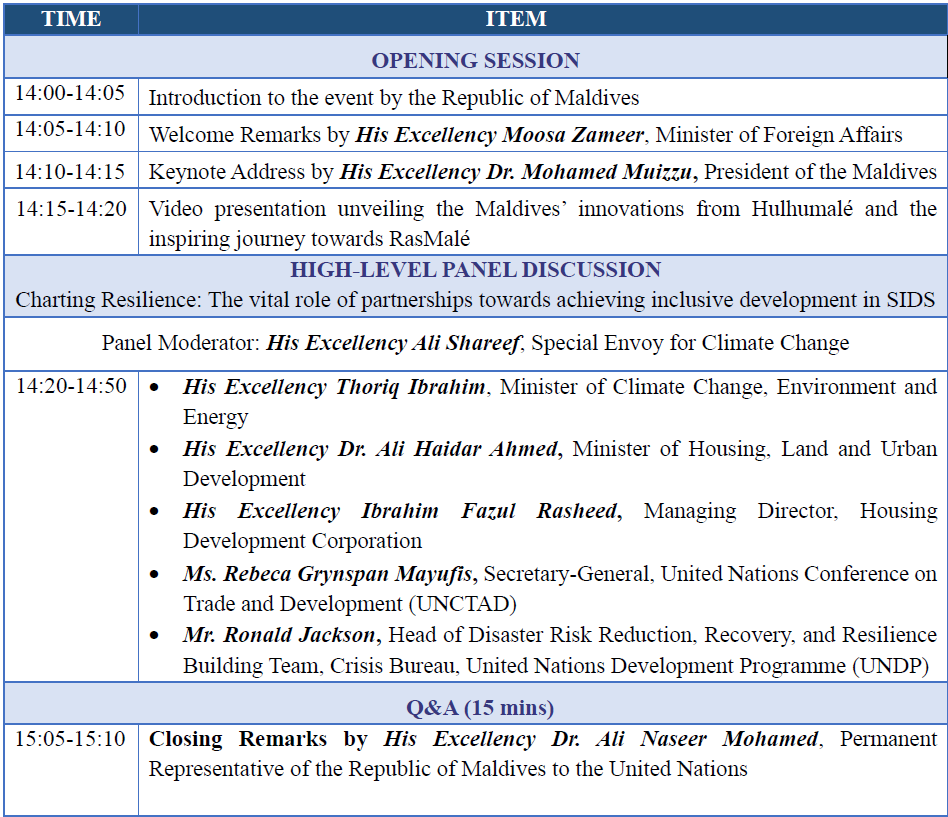
Dr. Mohamed Muizzu
President
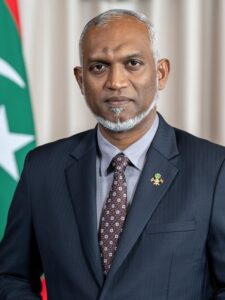
President Dr. Mohamed Muizzu is the 8th President of the Republic of Maldives. He took his oath of office on 17th November 2023.
Moosa Zameer
Minister of Foreign Affairs
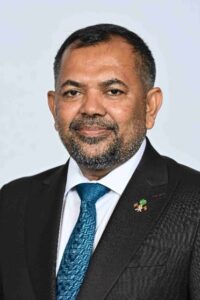
Mr. Moosa Zameer is the Minister of Foreign Affairs of the Republic of Maldives. He was appointed to this role in November 2023. He was the former Minister of Tourism, and former Member of Parliament with a proven track-record, particularly on negotiating and securing development and private sector financing from a multitude of sources. Minister Zameer was also the Managing Director for several successful private companies, specialising in the marine sector, tourism and hospitality, and fuel supply.
Minister Zameer graduated from the Cardiff Metropolitan University, with a Master of Business Administration.
Thoriq Ibrahim
Minister of Climate Change, Environment and Energy
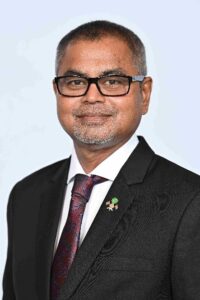
Mr. Thoriq Ibrahim is the Minister of Climate Change, Environment and Energy of the Republic of Maldives. He was appointed to this role in November 2023. This is the second time he has assumed the position, having filled it previously from 2013 – 2018. His ministerial portfolio includes protecting the natural environment and its resources, managing climate change advocacy and action, coordinating UN Sustainable Development Goals, provision of energy, water sewerage and waste management services in the Maldives.
Minister Thoriq is a strong advocate of climate action for small island states, chairing the Alliance of Small Island Developing States for four years. He graduated from the Loughborough University of Technology, United Kingdom, with a Master of Science in Building Science.
Dr. Ali Haidar Ahmed
Minister of Housing, Land and Urban Development
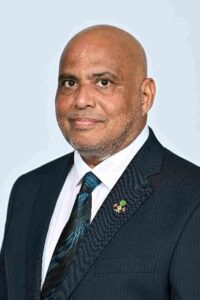
Dr. Ali Haidar Ahmed is the current Minister of Housing, Land and Urban Development of the Republic of Maldives. He was appointed to this role in November 2023.
Dr. Ali Haidar Ahmed is the current Minister of Housing, Land and Urban Development of the Republic of Maldives. He was appointed to this role in November 2023. His ministerial portfolio includes housing provision, land regulation and control, and urban development, including regional and national development. He has also previously fulfilled this role in 2008.
Minister Haidar earned his PhD in Planning Studies from the University College London. A specialist in housing and urban development, Minister Haidar’s career spans 4 decades. He has a special interest in housing finance, land administration, land and housing law, as well as urban planning and development planning.
Ibrahim Fazul Rasheed
Managing Director of the Housing Development Corporation
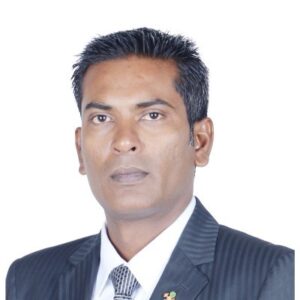
Mr. Ibrahim Fazul Rasheed was appointed as the Managing Director of the Housing Development Corporation of the Maldives in November 2023. With robust leadership and management skills, he is a results-driven leader recognized for strengthening management teams to enhance efficiency and company profitability. He was a former Member of Parliament of the Maldives.
Mr. Rasheed graduated from Edith Cowan University, Western Australia, with a Master of Business Administration.
Ali Shareef
Special Envoy for Climate Change
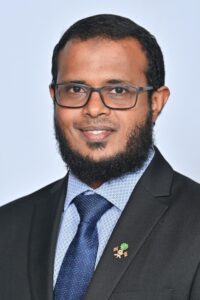
Ali Shareef served the Government of Maldives for more than 16 years with the Maldives Meteorological Service and at the Climate Change Department of the Ministry of Environment. Coming from a scientific background with a profession in Meteorology and Climatology, he has a wealth of information on the needs and use of data for climate change adaptation. He has experience in program and project implementation related to climate change adaptation and mitigation.
At the Ministry of Environment working as a Director, he was responsible for policy formulation, the national and international reporting and implementation of programs and projects related to adaptation and mitigation.
He also played a key role in the formulation of the Maldives Climate Change Policy Framework, Maldives first Biennial Update Report (BUR) to the United Nations Framework Convention on Climate Change (UNFCCC), Second National Communication, the Maldives first and second Nationally Determined Contributions (NDC). In addition to this, he participated in many collaborative research with international organizations, EU and many universities.
Ali in his professional capacity represented the Maldives as a committee member in various international committees such as the Katowice Committee of Experts on the Impacts of the Implementation of Response Measures (KCI), the Adaptation Committee (AC), Least Developed Countries Expert Group (LEG), and Consultative Group of Experts (CGE). He also was a member of the national delegation to the UNFCCC negotiations. He was a Lead Author to the Working Group III (WG III) contribution to the Sixth Assessment Report of the Intergovernmental Panel on Climate Change (IPCC). He worked as the Deputy Chief of Party at the USAID Climate Adaptation Project before he assumed the position of Special Envoy for Climate Change at the President’s Office.
Ali obtained a postgraduate degree in Atmospheric Science and Numerical Modelling at the University of Canterbury and his undergraduate degree in Meteorology and Oceanography at the University of Flinders, South Australia.
Dr. Ali Naseer Mohamed
Permanent Representative of the Maldives to the United Nations
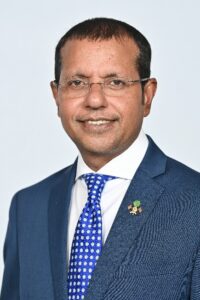
Dr. Ali Naseer Mohamed is the Permanent Representative of the Maldives to the United Nations. He was appointed to this role in November 2023. This is the second time he has assumed the position, having filled it previously from 2017 – 2019. Prior to his appointment, Dr. Mohamed served in various posts in the Ministry and at Maldives diplomatic Missions, including as Foreign Secretary and Additional Secretary in the Policy Planning Division.
Dr. Mohamed earned his PhD and Master of Arts degrees in diplomatic studies from the Australian National University, and the University of Leicester in the United Kingdom, respectively.
Rebeca Grynspan Mayufis
Secretary-General, United Nations Trade and Development
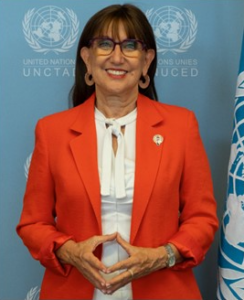
Ms. Rebeca Grynspan is the Secretary-General of the United Nations Trade and Development (UNCTAD). United Nations Secretary-General António Guterres, following consultations with the Chairpersons of the regional groups of Member States, requested the General Assembly to confirm Rebeca Grynspan of Costa Rica as the next Secretary-General of UNCTAD. The General Assembly confirmed the nomination on 11 June 2021.
Ms. Grynspan is currently Secretary-General of the Ibero-American Conference, a position she has held since 2014. Prior to becoming Secretary-General, she was appointed as Associate Administrator of the United Nations Development Programme (UNDP) in 2010. She served as UNDP Regional Director for Latin America and the Caribbean from 2006 to 2010 and was Director of the Subregional headquarters in Mexico for the Economic Commission for Latin America and the Caribbean (ECLAC) from 2001 to 2006.
Prior to joining the United Nations, Ms. Grynspan held several ministerial level positions with her government, including as Minister of Housing, Minister Coordinator of Economic and Social Affairs and Deputy Minister of Finance, before becoming Vice-President of the Republic of Costa Rica from 1994 to 1998.
Ms. Grynspan holds a degree in Economics from the University of Costa Rica and a Master of Science degree in Economics from the University of Sussex. She has been awarded a Doctorate Honoris Causa by the University of Salamanca, the University of Extremadura and the European University of Madrid. Ms. Grynspan is fluent in English and Spanish.
Ronald Jackson
Head of Disaster Risk Reduction, Recovery and Resilience Building Team, United Nations Development Programme
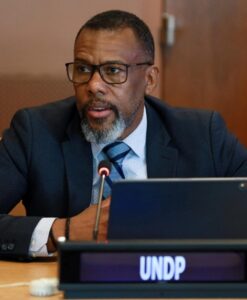
Mr. Ronald Jackson has over twenty (23) years of experience in Disaster Risk Reduction, Recovery and Management. He is currently the Head of Disaster Risk Reduction, Recovery and Resilience Building Team within the Crisis Bureau at the United Nations Development Programme. While at UNDP he has led the efforts to strengthen the Programming and Practice Area for Disaster Risk Reduction leading to the articulation of UNDP’s Approach to Risk Informed Development, the Development of the Urban Risk and Resilience Building Initiative and the Preparedness Academy for National and Local Government Actors.
Mr. Jackson has served as the Executive Director of the Caribbean Disaster and Emergency Management Agency for seven (7) years where he led the framing of the 2014-2024 Comprehensive Disaster Management Strategy for CARICOM and the Development of the Caribbean Pathway for Resilience in 2018; He was instrumental in establishing the Regions First Caribbean Consortium for Multi-Hazard Early Warning Systems in 2019, The Establishment of the Regional Training Centre and the Caribbean Risk Information System in 2018 and 2019 respectively. He has also served as the Director General and Deputy Director General of the Office of Disaster Preparedness and Emergency Management (ODPEM) in Jamaica where he received a Certificate of Commendation from the Caribbean Community for his contribution to the rescue and recovery efforts in the aftermath of the January 2010 Haiti Earthquake.
Mr. Jackson holds a B.Sc. in Urban Planning from the University of Technology and is an Honorary Patron of the School of the Built Environment. He also holds an M.Sc. in Natural Resources Management from the University of the West Indies Mona, and a Master’s Certificate in Monitoring Evaluation and Reporting