Introduction
The Maldives’ physical vulnerability, coupled with its reliance on climate-sensitive sectors such as tourism, fisheries, and subsistence farming, places the country at high risk of adverse impacts from climate change. It is exposed to a wide range of natural hazards, including pluvial and coastal flooding, swells, erosion, cyclone winds, storm surges, heat waves, earthquakes, tsunamis, and droughts. These hazards result in severe consequences such as loss of life, injuries, displacement, damage to infrastructure and housing, livelihood disruptions, environmental degradation, reduced economic productivity, particularly in tourism and increased poverty and social vulnerability.
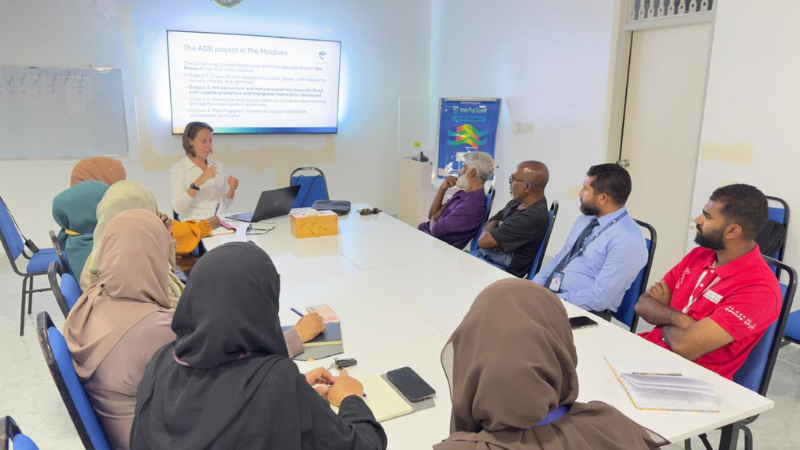
To address these challenges, with support from the Asian Development Bank (ADB), the Ministry of Tourism and Environment, in collaboration with the Maldives Meteorological Service, Ministry of Agriculture and Animal Welfare, and other partners, will implement the Enhancing Climate Resilience and Food Security project.
The project is funded through a combination of grants, loans, and technical assistance from the Asian Development Fund, Japan Fund for Prosperous and Resilient Asia and the Pacific, the Ocean Resilience Coastal Adaptation Trust Fund the and the Government of Maldives.
Project Objectives
The overarching aim of the Enhancing Climate Resilience and Food Security project is to support the Maldives in reducing the vulnerability of island communities to climate risks by strengthening institutional and community capacities for climate change adaptation, introducing climate-smart technologies in agri-food systems, promoting climate adaptation businesses and urban farming, and implementing effective flood and coastal protection through nature-based solutions. Over the long term, it will contribute to improved climate and disaster resilience, as well as food and nutrition security.
A strong social focus will be placed on empowering women, youth, and vulnerable communities, particularly in remote islands in the northern and southern regions where climate impacts are most severe. By targeting activities where women and youth can play major roles, the project will also help address inequality that could be exacerbated by climate change.
Project Outcome
The impact of the project is aligned with the goal of enhancing climate and disaster resilience and improving long-term food and nutrition security, as outlined in the Maldives’ Updated Nationally Determined Contribution (NDC). The NDC is guided by the Climate Change Policy Framework (2015), published by the Republic of Maldives, Ministry of Environment and Energy.
The project is designed to reduce the vulnerability of island communities to climate risks. Additionally, it plays a key role in promoting women’s empowerment and addressing inequalities that may be exacerbated by climate change by investing in activities where women and youth can take on significant roles, with a particular focus on women, youth, and vulnerable remote island communities in the northern and southern regions.
The project will strengthen institutional and community capacity for climate adaptation by enhancing climate and disaster risk-informed advisory and early warning systems. Key interventions include installing a new radar system at Addu weather station, repairing the existing radar in Malé, and equipping the Maldives Meteorological Service with integrated data processing tools for real-time monitoring, forecasting, and early warning.
The project will also pilot agro-climate advisories on selected agricultural islands and deliver capacity-building programs on weather monitoring, forecasting, and communication to support adaptive practices. At the community level, preparedness for extreme events will be improved through inclusive disaster response planning, awareness campaigns, and behavior change initiatives, ensuring gender-responsive and socially inclusive approaches.
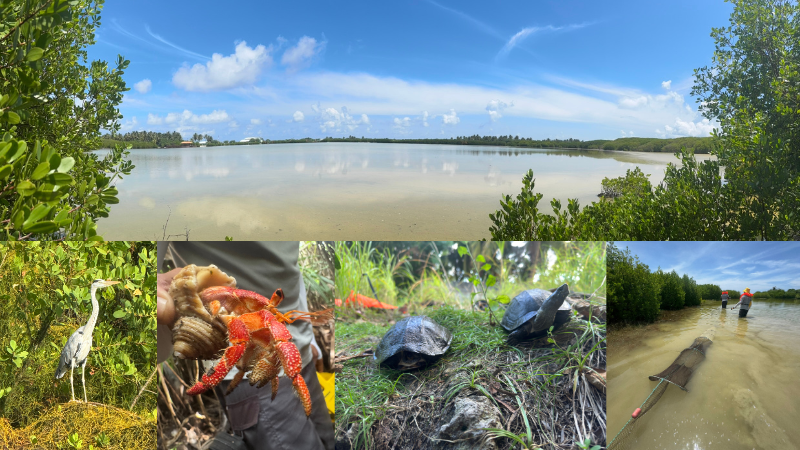
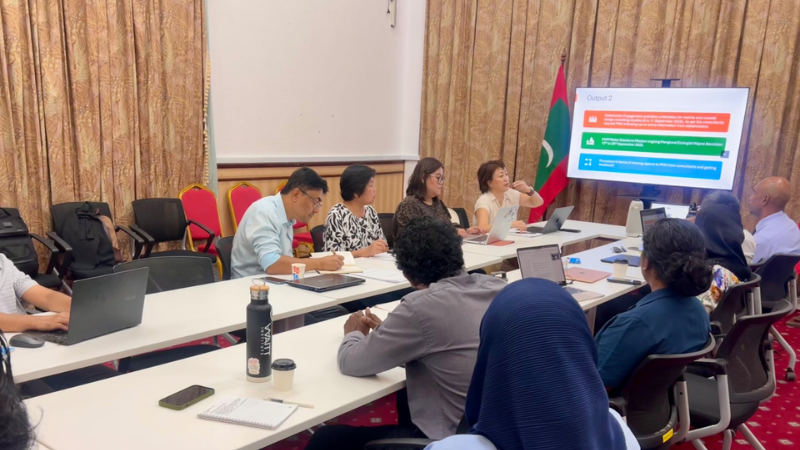
Implementation of flood and coastal protection measures on Kulhudhuffushi Island. This will combine infrastructure upgrades such as stormwater drainage and filtration systems with nature-based solutions including bioswales, mangrove restoration, wetland rejuvenation, and urban greenery to enhance infiltration and flood retention. Coastal protection structures on the eastern shoreline will also be strengthened to prevent erosion and overtopping. These interventions will be supported by environmental and hydraulic modeling studies, detailed subproject designs, and integrated flood risk management measures, alongside the development of a drainage management plan and a mangrove restoration and management plan to ensure long-term sustainability.
The project will promote climate-smart technologies and practices in agri-food systems to address challenges of limited topsoil and freshwater, focusing mainly on Haa Dhaalu and Addu atolls. It will support water-efficient and resilient urban farming through the construction of a multipurpose facility at the Hanimaadhoo Agriculture Center (HAC), which will include a training space, a basic laboratory for soil and pathogen testing, and office facilities. Capacity building will be strengthened through training programs, extension advisory services, and technical support for urban home gardeners, farmers, cooperatives, women’s development committees (WDCs), civil society organizations (CSOs), and women and youth-led agribusinesses. The project will also provide guidance on developing and implementing urban farming and agribusiness proposals, fostering market linkages, and adopting climate-smart horticultural technologies to enhance productivity, profitability, and income generation.
The project will foster climate adaptation businesses and urban farming by providing matching grants to trained beneficiaries from Output 3, as well as other individuals, farmer groups, women’s development committees (WDCs), civil society organizations (CSOs), and micro, small, and medium-sized enterprises (MSMEs) across the Maldives. Grant allocation will follow the qualification and selection criteria outlined in the Project Administration Manual (PAM). The project team will finalize operational guidelines, launch the grant scheme, evaluate and approve proposals, and monitor implementation. The SME Development Finance Corporation (SDFC), experienced in supporting MSMEs through concessional credit, will manage the identification, evaluation, selection, and approval process. Grants will cover the full cost of capital expenditures for eligible adaptation businesses, particularly women- and youth-led enterprises, with beneficiaries contributing toward operating costs.
Partners Involved
- Ministry of Tourism and environment (MoTE)
- Ministry of Finance and Planning (MoFP)
- Maldives Meteorological Service (MMS)
- Ministry of Agriculture and Animal Welfare (MoAAW)
- Kulhudufushi City Council (KCC)
- SME Development Finance Corporation (SDFC)
Publications
Implementation and Administration Documents
Project Formulation Documents
Safeguard Documents
-
- Environmental Assessment and Review Framework — 2024
- Resettlement Framework — Aug 2024
- Initial Environmental Examination — Aug 2024
- Due Diligence Report — Output 1 — Jul 2024
- Due Diligence Report — Output 2 — Jul 2024
- Due Diligence Report — Output 3 — Jul 2024
- Due Diligence Report — Output 3 — Updated – March 2026
- Semi Annual Environmental Monitoring Report – January to June 2025
- Semi Annual Environmental Monitoring Report – July to December 2025