
Climate Change


Integrated Climate Change Strategy (ICCS)

ICCS Projects
TNA - Technology Needs Assessment
NAPA
- National Adaptation Plan of Action
NCSA
- National Capacity Self Assessment

Nakaiy - News letter on ICCS Projects


National Greenhouse Gas Inventory and Vulnerability Assessment: A Climate Change Enabling Activity

The Republic of Maldives has signed and ratified the UN Framework Convention on Climate Change (UNFCCC). Accordingly, the Maldives is obligated to prepare National Communications to the Conference of the Parties (COP) to the Convention. The Communication should contain: an inventory of the country's sources and sinks of greenhouse gases (GHG) and its options for mitigation of their uses; and an assessment of the country’s vulnerability to climate change with proposed options for adaptation.

The Global Environment Facility (GEF) established by the World Bank, the United Nations Environment Program and the United Nations Development Program has been designated as the one of the sources of funds intended to assist eligible countries to carry out activities that will enable them to meet their reporting obligations under the UNFCCC. The Republic has been awarded such a project, which was initiated in early 1998 and will span four years.


Climate Change - the Science


Human activities are increasing the atmospheric concentrations of greenhouse gases, thus altering the radioactive balances and warming the atmosphere. The increased greenhouse gas concentration is projected to lead to changes in temperature, precipitation and other climate variables, resulting in global changes in soil moisture, an increase in global mean sea level, and prospects for more severe extreme high-temperature events, floods and droughts in some places.

Find out about the science of climate change
The Science of Climate Change - Link to IPCC

[top of page]


Impacts of Climate Change and Sea Level Rise


The Intergovernmental Panel on Climate Change projects an increase in global mean surface temperature of about 1 to 3.5 degrees Celsius by 2100. Such a warming has not been experienced at any time during the past 10,000 years and with the warming is an associated increase in sea level. The IPCC best estimate of sea level rise is 50 cm over the next century and it could be as high as 1 metre or as low as 15 centimetres. The scientists also believe that once the process is set into motion, it cannot be slowed down in anything less than a few millennia.


Averting Catastrophe - His Excellency Maumoon Abdul Gayoom
The impacts of climate change - link to IPCC

[top of page]


Maldives and Climate Change


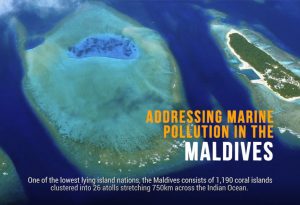
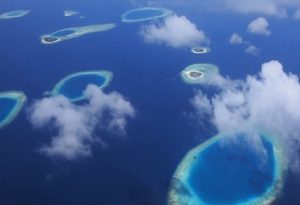
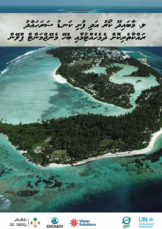
In Maldives, over 80% of the land is less than 1 meter above mean sea level. So climate change and associated sea level rise represents a catastrophe in the making for Maldives with potentially devastating consequences for life in the Maldives. Precautionary measures are essential to save the Maldives and many other low lying island states who face similar threats.


Reference to Reports on Sea Level Rise and Implications

[top of page]


Small States Conference on Sea Level Rise

To discuss the issues of sea level rise among the small states of the world who are the most vulnerable to climate change, Small States Conference on Sea Level Rise was held in Malé, in November 1989. The outcome of the conference was the "Malé Declaration on Global Warming and Sea Level Rise."

The Malé Declaration paved the way for the establishment of an Action Group among small island states, to co-ordinate a joint approach on the issues of climate change, global warming and sea level rise, and to pursue and follow up on global and regional response strategies.

The first meeting of the Action Group established by the Small States after the Conference in November 1989 was held in Maldives in September 1990. This Action Group later transformed into the AOSIS at the Second World Climate Conference.

The Malé Declaration also urged for early negotiations for a Framework Convention on Climate Change. The UN Convention on Climate Change was adopted in 1992 and the small island states jointly played a very important role in the sessions of the Intergovernmental Negotiating Committee set up to formulate the Convention.

Among the main achievements of the Malé Declaration, the increased awareness it created among the international community on the special vulnerability of small island states is noteworthy. That was the first time the small island states started speaking together to draw the attention of the global community to this important issue and it had a very good effect.


Alliance of Small Island States (AOSIS)

Maldives was instrumental in the formation of the Small Island Action Group that eventually at the Second World Climate Conference in Geneva, in 1990, became the Alliance of Small Island States. The Alliance of the Small Island States commonly known as AOSIS is a group of developing countries that share common objectives on environment and sustainable development. The group comprises of small island and low-lying coastal developing countries which are members of island regional grouping or organizations. The members of AOSIS are particularly vulnerable to the adverse consequences of climate change such as sea level rise, coral bleaching and the increased frequency and intensity of tropical storms.


AOSIS was the first to express the view that the commitments of the Annex I parties of the Climate Convention were inadequate in the light of the Convention’s objective and the best available scientific knowledge. Consequently, AOSIS submitted a Draft Protocol on Greenhouse Gas Emission Reduction to the Interim Secretariat of the Convention, in time for consideration and possible adoption at the first Conference of the Parties.


United Nations Framework Convention on Climate Change

Maldives is a party to the United Nations Framework Convention on Climate Change. The Maldives signed the Climate Convention on 12 June 1992 and ratified the Convention on 28 October 1992.


Text of the Convention
Find out about the UNFCCC process
Meetings

[top of page]


Kyoto Protocol

Kyoto Protocol is the historic agreement reached in Kyoto in December 1997 to deal with a potential global catastrophe. It is a significant step forward from the commitments set out in the United Nations Framework Convention on climate Change and lays a solid foundation for greenhouse gas emission reduction in the future.

There are some very important elements in this Protocol. Under the Protocol agreed to, 38 nations will be cutting greenhouse gas emissions to slightly more than 5 percent below the emission levels of 1990.

Maldives is the first country to sign the Kyoto Protocol and is among the first countries to ratify the Protocol


Text of Kyoto Protocol
Link to UNFCCC

[top of page]